Share
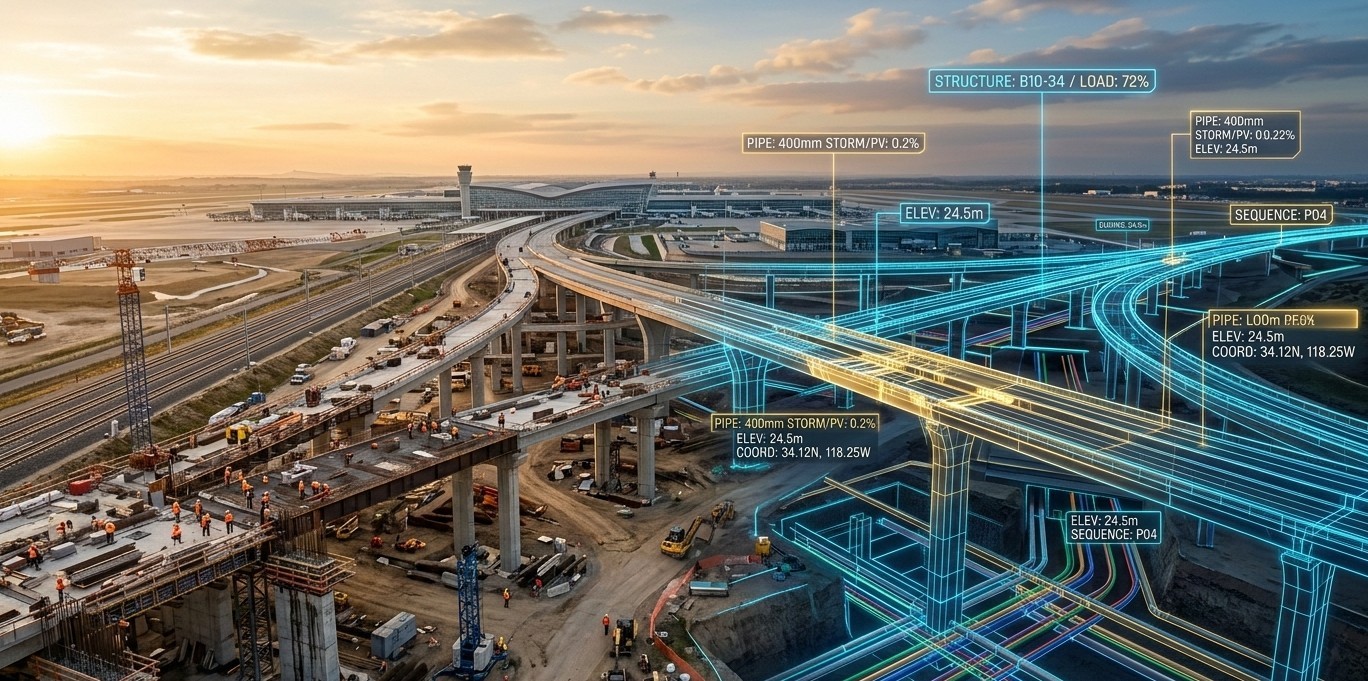
Large-scale infrastructure projects, such as transportation networks, airports, and utility systems, are defined by complexity. Multiple stakeholders, long construction timelines, and massive volumes of technical data make coordination one of the biggest challenges.
This is where Building Information Modeling (BIM) has become a critical tool for modern infrastructure delivery.
In major projects, BIM modeling is not simply about creating 3D models. It supports integrated planning, design coordination, and information management across disciplines. Many contractors rely on specialized BIM teams who understand infrastructure workflows and align digital models with construction execution requirements.
Managing Complexity Through Model-Based Coordination
Infrastructure projects typically involve multiple engineering systems, structural works, utilities, transportation elements, and environmental interfaces. Traditional 2D documentation often struggles to manage these interactions.
BIM enables multidisciplinary coordination by integrating these systems into a shared digital environment. Clash detection, spatial analysis, and model-based reviews help identify conflicts early, reducing rework and construction delays.
Improving Cost Control and Quantity Accuracy
For large infrastructure developments, small quantity errors can translate into millions in unexpected costs. BIM models enable more reliable quantity extraction and support more accurate cost estimation during pre-construction.
Decision makers benefit from improved visibility into materials, scope changes, and cost drivers throughout the project lifecycle.
Supporting Construction Planning and Sequencing
Large infrastructure projects often require phased construction and complex logistics. BIM supports construction simulation and sequencing analysis, allowing teams to evaluate installation strategies before field work begins.
Model-based planning improves schedule reliability and helps reduce disruptions across project stages.
Strengthening Long-Term Asset Management
Infrastructure assets typically operate for decades. BIM models can evolve into digital asset records that support maintenance planning, facility management, and lifecycle analysis after project completion.
This transforms BIM from a design tool into a long-term information management system.
Why BIM Matters for Infrastructure Leaders
For executives and project directors overseeing major infrastructure investments, BIM is not simply a technology trend. It is a coordination and risk management framework.
Projects that integrate BIM early improve transparency, reduce design conflicts, and strengthen cost and schedule control. In large-scale infrastructure delivery, the ability to manage information effectively often determines whether a project succeeds or struggles.
BIM provides the structure needed to manage that complexity.