
Hospitality work runs on brand standards, operational logic, and back-of-house complexity that most generalist architects underestimate. A hotel set isn't a commercial set with finishes. It's a set with brand-compliance documentation, FF&E coordination, kitchen and laundry equipment routing, guest-room repetition with site-specific variation, and operational adjacencies that drive every floor plan decision.
Hospitality firms scale slowly for the same reason every design firm scales slowly: senior time gets consumed by production. The brand audits, the back-of-house coordination, the FF&E integration, the operational reviews. None of it is design work. All of it has to happen.
AEdigo gives hospitality architecture firms, hotel operators, and developers on-demand access to pre-vetted architectural professionals with hospitality experience. They handle CD production, brand standard compliance documentation, FF&E coordination, and revision rounds, working inside your firm's standards and your brand's requirements.
What hospitality architectural design services actually deliver
Typical outputs from a hospitality architectural professional working through AEdigo:
Construction document sets for hotels, F&B venues, resorts, and mixed-use hospitality
Brand standard compliance documentation aligned to operator requirements
Guest room and back-of-house drawing packages
FF&E coordination drawings and specification integration
Kitchen, laundry, and equipment routing drawings
Operational adjacency studies and circulation diagrams
Permit submission packages
Owner and operator review cycle support
When you actually need hospitality design support
Your hospitality firm has multiple projects in CD simultaneously and senior time is consumed by production.
A brand audit cycle is generating revision volume the team can't absorb.
FF&E coordination is bottlenecking the documentation pipeline.
A new operator brand has standards your team hasn't documented to before.
Guest room production work is occupying senior calendars instead of public space and back-of-house design.
Permit submissions are slipping and authority comments are stacking up.
An owner is moving multiple keys into design and the in-house team can't carry the volume.
How AEdigo runs hospitality design work
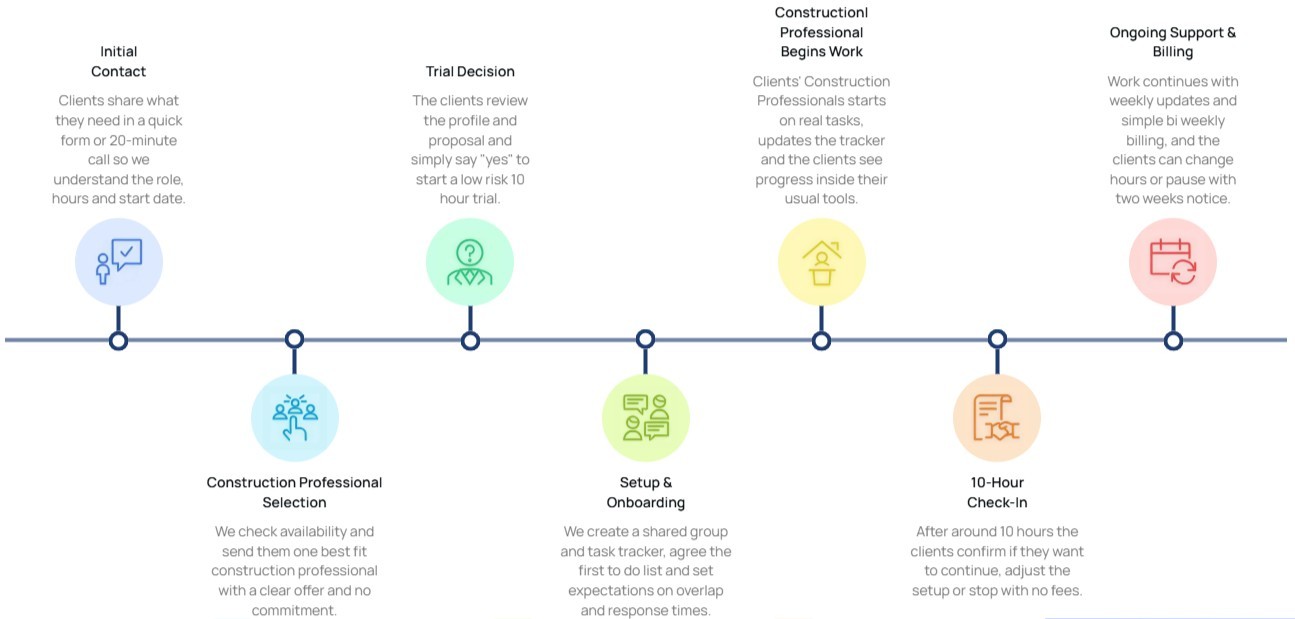
1. Match against project type and brand context
Hotel-only specialists don't get placed on F&B. Limited-service hotel professionals don't get matched to luxury or resort scopes. The match accounts for hospitality typology, brand context, and software fluency.
2. Kick-off on brand standards and operational requirements
Brand standard documents, operator-driven design criteria, FF&E specification, kitchen and laundry equipment specs, and authority requirements all get locked at kick-off. Brand-driven rework is the most expensive form of revision in hospitality.
3. Production cadence aligned to operator review cycles
Hospitality projects run on operator review cycles as much as authority review cycles. Production cadence aligns to both, so the team doesn't bottleneck on either.
4. Internal review against brand criteria
Before operator submission, the package goes through self-review against the brand standard and operator design criteria. Brand-driven comment cycles are the most predictable cause of revision delays in hospitality, and they're avoidable.
5. Progress report
Drawings completed, brand audit status, operator review status, and revision pipeline. Project leadership sees the production reality across both authority and brand tracks.
Tools hospitality architectural professionals work in
Autodesk Revit for BIM-led hospitality production
AutoCAD for AutoCAD-led firms and 2D-driven scopes
Bluebeam Revu for brand audit and authority comment management
SketchUp, Rhino, and Lumion for design development and presentation
Operator-specific brand portals and submission tools
Authority submission templates and portals
What separates a hospitality architect from a commercial architect
Commercial architects design buildings. Hospitality architects design buildings that operate, every day, for paying guests, and that have to look right, function right, and stay compliant with brand standards through years of renovations and refurbishments.
AEdigo vets hospitality architectural professionals on:
Brand standard documentation experience across major operators
Back-of-house coordination including kitchen, laundry, and equipment routing
FF&E specification and coordination skills
Guest room repetition with site-specific variation discipline
Operational adjacency understanding and circulation logic
Authority submission experience for hospitality projects
Hospitality code experience including life safety, accessibility, and food service
Software fluency across the hospitality stack
Use cases by stakeholder
Hospitality architecture firms
CD production for hotels, resorts, and F&B
Brand standard compliance documentation
FF&E coordination and specification integration
Operator review cycle support
Hotel operators and brands
Brand standard QC against design submissions
Documentation review for franchise compliance
Cross-property documentation standardization
Developers and owners
Owner-side design QC during design development and CD
Independent review of brand audit responses
Permit cycle management on owner-led projects
Common hospitality design failures that delay projects
Hospitality projects fail in predictable ways. If your past projects have hit any of these, the issue is process, not design talent.
Brand standard non-compliance discovered during operator audit instead of internal review.
FF&E coordination gaps creating field issues during installation.
Back-of-house adjacency mistakes that operations teams catch only during commissioning.
Kitchen and laundry equipment routing inconsistent across drawing sheets.
Guest room variations not documented systematically, creating field uncertainty.
Permit submissions missing hospitality-specific code documentation.
Operator design criteria treated as preferences rather than requirements.
Where hospitality firms can offload production
Hospitality firms scale with operator volume, not with internal headcount. The offload points are predictable across the industry.
Guest room production work, where the design judgment is small and the volume is large.
Brand audit response cycles, which generate predictable revision volume.
FF&E coordination drawings, which require integration but not design decisions.
Back-of-house equipment routing, which is procedural against the operator's spec.
Authority submission packages, which run on a parallel track to operator review.
Multi-property documentation standardization, where the design framework was set once and the per-property work adapts to site conditions.
Hospitality design services vs. the alternatives
The alternatives are: hire more in-house hospitality architects, contract to commercial generalists without hospitality depth, or stretch the senior team across all phases.
Hiring full-time works for firms with steady hospitality flow. It doesn't fit firms with project-by-project cycles or operator-driven volume swings.
Commercial generalists without hospitality depth miss brand standard requirements, FF&E coordination details, and operational adjacencies that hospitality teams catch reflexively.
Stretching the senior team is the highest-cost option. The principals stop doing the design and operator-relationship work that defines hospitality firms.
AEdigo runs hospitality design support as a managed engagement: vetted hospitality professionals, your firm's standards, your operator's brand criteria, with internal review and progress reporting.
How engagement works
10-hour free trial
Flexible billing tied to actual hours worked
Cancel or pause with two weeks' notice
Capacity scales with project volume and operator review cycles
Self-managed and managed tiers available
Frequently asked questions
Implementation note: Wrap this section in FAQPage schema markup (schema.org/FAQPage) to qualify for rich results in Google.
Can the professional work inside our operator's brand standard documents?
Yes. The kick-off captures the operator's brand standard, design criteria, FF&E specifications, and submission requirements. Drawings come back brand-compliant on first internal review, not after the operator audit.
Do AEdigo's professionals have experience with major hospitality brands?
The professional pool includes architects with experience across major operators. The match process screens for the specific brand context of your project before placement, so the professional already understands the design criteria framework.
Can the professional handle FF&E coordination?
Yes. FF&E specification integration, layout coordination, and back-of-house equipment routing are part of standard scope on hospitality engagements.
How do you handle guest room production with site-specific variations?
Guest room work runs on a typical-room logic with documented variations per floor or site condition. The professional builds a typical room module, applies variations systematically, and documents the logic so field teams can build from it without confusion.
Can the professional support operator review cycles in addition to authority review?
Yes. Hospitality projects carry parallel review tracks (operator and authority). The professional handles both review streams as part of the engagement, including comment response and revision packaging.