
Projects fall behind. The contractors who recover do so because they had a defensible recovery plan, not because they pushed the field harder. Recovery scheduling is a discipline that turns a slipping project into a managed plan with measurable steps and committed durations. Most contractors don't have the in-house bandwidth to produce that plan when they need it most.
Recovery and mitigation scheduling isn't optimistic re-baselining. It's a structured analysis of what's possible: which activities can be accelerated, which can be resequenced, where additional resources actually move work forward, and where the constraints make recovery impossible regardless of effort. The output is a recovery plan that holds up under owner scrutiny and field reality.
AEdigo gives general contractors, subcontractors, owners, and project management firms on-demand access to pre-vetted schedulers fluent in P6 and MS Project who specialize in recovery scheduling. They build defensible recovery plans, document mitigation actions, and track recovery execution against the plan.
What recovery and mitigation scheduling actually delivers
The deliverable is a recovery plan with documented basis, mitigation actions identified, resource impacts assessed, and tracking discipline set up to verify recovery is actually occurring.
Typical outputs from a recovery scheduler working through AEdigo:
Recovery schedule analysis against current schedule status
Acceleration options including overtime, additional crews, and re-sequencing
Mitigation action plans tied to specific schedule activities
Resource impact analysis for accelerated work
Cost impact analysis of recovery options
Schedule narrative documenting recovery basis and assumptions
Owner submission packages where the contract requires recovery plans
Recovery execution tracking against the plan
When you actually need recovery scheduling support
Project schedule has slipped past defined thresholds and recovery is required.
An owner has issued a directive to submit a recovery plan.
A claims-stage project requires recovery analysis as part of the entitlement argument.
Critical path activities are tracking late and need mitigation analysis.
Resource and crew loading need to be re-analyzed against accelerated work.
An in-house team is too close to the project to produce a defensible recovery plan.
A recovery plan was submitted and rejected and a clean re-issue is needed.
How AEdigo runs recovery scheduling work
1. Match against project type and recovery context
Recovery scheduling specialists don't get placed on projects without slip analysis context. The match accounts for project type, schedule status, and contract requirements for recovery submission.
2. Kick-off on recovery requirements and methodology
Schedule baseline status, current update status, recovery requirements per contract, mitigation methodology, and submission format. The kick-off locks the framework before analysis begins.
3. Recovery analysis
Acceleration analysis, resequencing analysis, additional resource impact, and constraint analysis. Each option gets evaluated against schedule benefit, cost impact, and feasibility under field conditions.
4. Plan documentation
Recovery plan documented with basis, mitigation actions, resource impacts, and execution tracking framework. Schedule narrative supports the plan against owner review.
5. Execution tracking
Recovery execution gets tracked weekly against the plan, with variance analysis and adjustments documented as conditions change.
Tools recovery scheduling professionals work in
Primavera P6 for primary recovery analysis
Microsoft Project for MS Project-led teams
Acumen Fuse for forensic and recovery analysis support
Excel for acceleration analysis and resource modeling
Asta Powerproject for Asta-driven projects
Microsoft Word for narrative and plan documentation
What separates a recovery scheduler from a project scheduler
Project schedulers run updates. Recovery schedulers analyze slipping schedules and build plans that hold up under scrutiny. The methodology is different, the documentation discipline is different, and the consequences of getting it wrong are different.
AEdigo vets recovery schedulers on:
P6 or MS Project fluency at production level
Acceleration analysis and resequencing experience
Resource and crew loading methodology
Constraint analysis under recovery conditions
Schedule narrative writing skill
Owner submission experience for recovery plans
Construction context across project types
Communication skills for cross-stakeholder recovery review cycles
Use cases by stakeholder
General contractors
Recovery plan preparation for owner submission
Acceleration analysis for projects tracking late
Mitigation action planning for critical path delays
Recovery execution tracking
Subcontractors
Trade-specific recovery scheduling
GC-side recovery plan response
Acceleration analysis for self-perform scopes
Owners and program managers
Independent review of contractor recovery plans
Counter-analysis on contested recovery submissions
Multi-project recovery analysis
Common recovery scheduling failures
Recovery plans get rejected for predictable reasons. If your past plans have struggled in review, the issue is methodology, not effort.
Acceleration options identified without resource feasibility analysis.
Resequencing proposals that don't hold up under construction logic review.
Cost impact omitted or generic, leaving the owner without context.
Mitigation actions stated without specific schedule activity tie-back.
Recovery basis undocumented in the schedule narrative.
Recovery plan not aligned to contract submission requirements.
Execution tracking not set up, so plan vs. actual can't be measured.
What recovery plans that survive review actually contain
Recovery plans that owners accept share specific characteristics. The ones that get rejected share different ones.
Specific acceleration actions tied to specific schedule activities, not generic statements.
Resource analysis showing the additional crews, overtime, or shift changes are feasible.
Cost impact quantified per option, with the contractor's basis documented.
Schedule benefit calculated against the current schedule status, not an idealized baseline.
Constraint analysis showing what limits recovery, so the owner sees what's possible and what isn't.
Execution tracking framework set up so plan vs. actual can be measured weekly.
Recovery options and their realistic schedule benefit
Recovery options carry different cost and feasibility profiles. The contractor who knows what each option actually buys in schedule benefit makes better recovery decisions than one who treats them as interchangeable.
Overtime on the same crew typically buys 10 to 15 percent acceleration before productivity drops eat the gain.
Adding a second shift can buy substantial calendar acceleration but introduces coordination cost and quality risk.
Adding crews in parallel buys acceleration where work fronts allow, but constrained work fronts produce diminishing returns.
Resequencing buys acceleration without cost increase but requires logic verification to confirm feasibility.
Pre-purchasing long-lead items buys delivery-side acceleration but commits cost ahead of schedule benefit.
Substituting equivalent products buys acceleration on permit-driven scopes but may carry submittal cycle cost.
Why option-by-option analysis matters
Generic 'we'll accelerate' arguments don't survive owner review. Recovery plans that owners accept identify specific options, calculate the schedule benefit per option, and document the cost impact, so the owner sees what's possible and what each option buys.
Recovery scheduling services vs. the alternatives
The alternatives are: have the project scheduler develop recovery alongside active updates, contract a claims consultant at dispute stage, or accept the slip without a structured recovery analysis.
Project schedulers stretched between updates and recovery analysis usually deliver one badly. Updates win the calendar; recovery suffers.
Claims consultants engaged at dispute stage are more expensive and bring less control than building recovery analysis as the project moves.
Accepting slip without recovery analysis abandons time entitlement that proper analysis could have preserved.
AEdigo runs recovery scheduling as a managed engagement: vetted schedulers, your contract requirements, your project's actual conditions, with execution tracking and progress reporting.
How engagement works
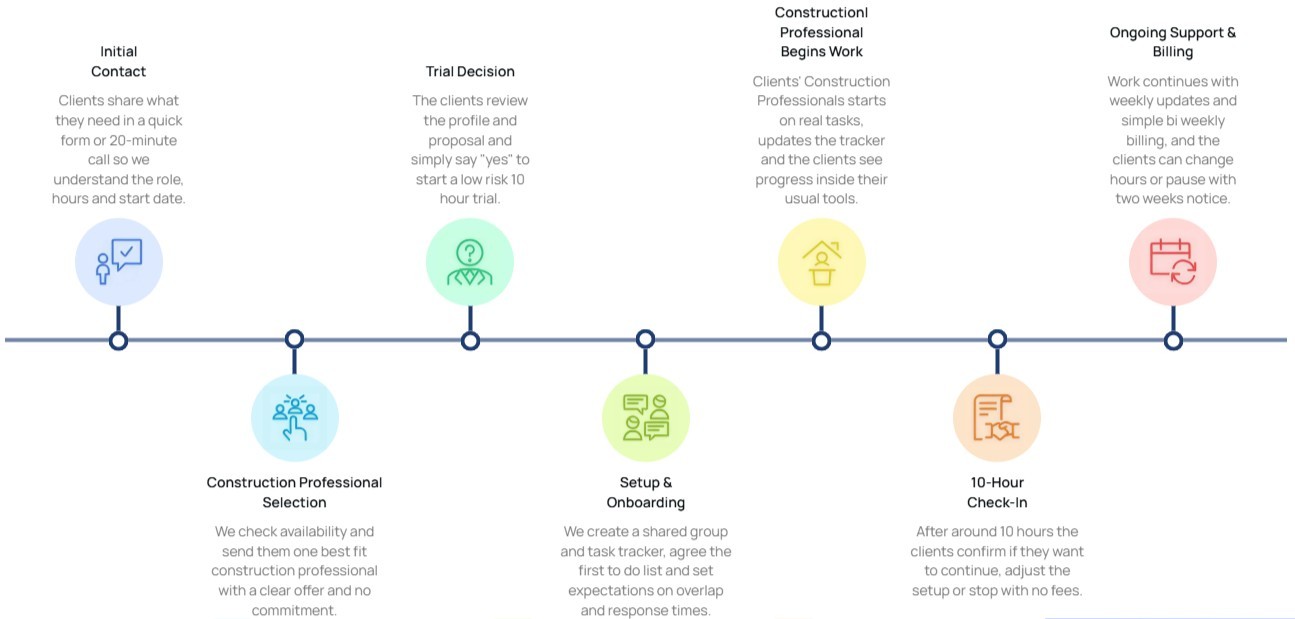
10-hour free trial
Flexible billing tied to actual hours worked
Cancel or pause with two weeks' notice
Capacity scales with project phase and workload
Self-managed and managed tiers available
Frequently asked questions
Implementation note: Wrap this section in FAQPage schema markup (schema.org/FAQPage) to qualify for rich results in Google.
Can the scheduler develop recovery plans for owner submission?
Yes. Owner submission preparation including recovery narrative, mitigation actions, and supporting documentation is part of standard scope. The format aligns to the contract's recovery plan requirements.
Does recovery analysis include cost impact?
Yes. Cost impact analysis for recovery options including overtime, additional crews, and acceleration is part of standard scope. The contractor sees what each option costs and what it buys in schedule benefit.
Can the scheduler track recovery execution against the plan?
Yes. Recovery execution tracking is part of standard scope on engagements that include plan implementation. Weekly variance against the recovery plan gets measured and reported.
What if the recovery plan needs to be revised mid-execution?
Plan revision is part of standard scope. As field conditions evolve and the recovery plan needs adjustment, the scheduler revises the plan, updates the narrative, and re-issues against the contract's requirements.
Can recovery analysis support a future delay claim?
Yes. Recovery plans built with claims-defense documentation discipline carry the supporting evidence to support a future delay analysis if entitlement becomes contested.