
Renderings sell projects, win pursuits, and unlock financing. They also burn enormous amounts of time when produced internally by designers who shouldn't be running render farms.
Most firms know rendering is offload work. The senior designer producing a marketing render is the most expensive way to produce that render. The same is true for permit visualization, stakeholder reviews, and pursuit imagery. The work has to happen, but it doesn't have to happen on a senior designer's calendar.
AEdigo gives architecture firms, design-build contractors, developers, and marketing teams on-demand access to pre-vetted rendering and visualization artists. They produce real-time renders in Enscape and Twinmotion, photoreal output in Lumion and V-Ray, walkthroughs, animations, and VR-ready environments.
What rendering and visualization services actually deliver
Typical outputs from a rendering and visualization artist working through AEdigo:
Photorealistic exterior and interior renderings for client and marketing use
Real-time visualization for stakeholder review and design workshops
Animated walkthroughs and project flythrough videos
VR-ready environments for immersive review
Pursuit and competition imagery against tight deadlines
Site context and massing visualizations
Visualization revisions across design iterations
Image optimization for print, web, and stakeholder presentation formats
When you actually need rendering and visualization support
Designers are producing renderings instead of designing.
A pursuit deadline is approaching and the visualization isn't ready.
An owner has requested visualization for stakeholder review on tight timing.
A marketing team needs imagery for a project launch.
Multiple projects are stacking into rendering simultaneously.
A real-time review session needs an Enscape or Twinmotion-ready model.
A competition or design submission requires polished visualization output.
How AEdigo runs rendering work
1. Match against output type and software
Photoreal artists don't get matched to real-time review work. Lumion specialists don't get placed where V-Ray is the actual need. The match accounts for output type, software fluency, and review cadence.
2. Kick-off on visual standards and brand
Brand voice, lighting style, material treatment, atmospheric handling, and any firm-specific visual standards. The kick-off locks the visual identity before production starts.
3. Production cadence aligned to deadlines
Rendering work runs against client review or pursuit deadlines. The artist schedules backward from the target, leaving time for the firm's internal review and revision rounds.
4. Internal review against visual standards
Before delivery, output goes through self-review against the firm's visual standards. Lighting, materials, composition, and post-production treatment get checked before the firm sees the first round.
5. Revision rounds
Revision rounds are part of standard scope. Material changes, lighting adjustments, composition refinements, and post-production updates run inside the engagement.
Tools rendering and visualization artists work in
Lumion for real-time and photoreal visualization
Enscape for design-stage real-time review
Twinmotion for real-time visualization and walkthrough
V-Ray for photoreal still rendering
Corona Renderer for high-quality interior visualization
Unreal Engine for VR and immersive review
Photoshop for post-production and compositing
After Effects for animation post-production
What separates a visualization artist from a render operator
Anyone can press render. The artist who delivers imagery that actually moves a pursuit or a client review brings composition, lighting, material, and atmosphere judgment that a render operator doesn't.
AEdigo vets rendering artists on:
Composition and visual storytelling instinct
Lighting and atmospheric judgment across times of day and conditions
Material treatment and surface depth
Post-production discipline including compositing and color grading
Software fluency across the visualization stack
Output optimization for the intended use case
Revision discipline and visual consistency across project rounds
Communication skills for design-team feedback cycles
Use cases by stakeholder
Architecture firms
Client presentation visualization across project phases
Pursuit and competition imagery
Marketing and portfolio renderings
Real-time review environments for design workshops
Developers and owners
Marketing visualization for pre-leasing and pre-sales
Stakeholder review environments
Investor presentation imagery
Contractors and design-build firms
Owner visualization during preconstruction
Design-build pursuit imagery
Phasing and logistics visualization
Common rendering failures that waste production cost
Most rendering rework traces to predictable failures. If your past projects have hit any of these, the issue is process, not artist effort.
Visual standards undefined at kick-off, creating subjective revision cycles.
Output produced for the wrong use case (photoreal for stakeholder review, real-time for marketing).
Composition decisions made without alignment to the project's actual selling story.
Material treatment inconsistent across imagery sets.
Lighting decisions changing between renders, breaking visual continuity.
Post-production undefined, leading to inconsistent finish quality across deliverables.
Revision rounds run outside the engagement's intended scope, generating cost overrun.
Choosing the right output type for the actual use case
Most rendering rework traces to a mismatch between the output type and the use case. A photoreal V-Ray still doesn't help a design workshop. A real-time Enscape walkthrough doesn't deliver the marketing imagery a leasing campaign needs.
The use cases worth distinguishing at engagement start:
Marketing and pursuit imagery, where photoreal output and brand-aligned post-production matter most.
Client design review, where real-time walkthroughs and design-stage refinement support faster iteration.
Stakeholder workshops, where interactive review environments and the ability to test alternates live drive the value.
Pre-leasing and pre-sales, where high-finish photoreal still imagery and animation carry the project's selling story.
Authority and permit submission, where accuracy outweighs visual polish.
Investor and capital-stack presentations, where the visualization has to support a financing conversation, not just a design conversation.
Why the kick-off captures use case first
The use case drives every modeling and rendering decision: software, post-production approach, output format, animation requirements, and revision discipline. Generic rendering work without a defined use case usually produces output that's adequate for nothing in particular.
Rendering services vs. the alternatives
The alternatives are: have designers produce renderings, contract to a low-cost render shop without firm-specific brand fluency, or use real-time tools internally without visualization discipline.
Designers producing renderings is the most expensive option, because senior time goes to rendering instead of design.
Low-cost render shops produce output that doesn't match firm visual standards, generating revision cycles that erase the cost savings.
Internal real-time tools without visualization discipline produce output that's fast but inconsistent, undermining the firm's visual identity over time.
AEdigo runs rendering as a managed engagement: vetted artists, your firm's visual standards, with internal review and revision coverage.
How engagement works
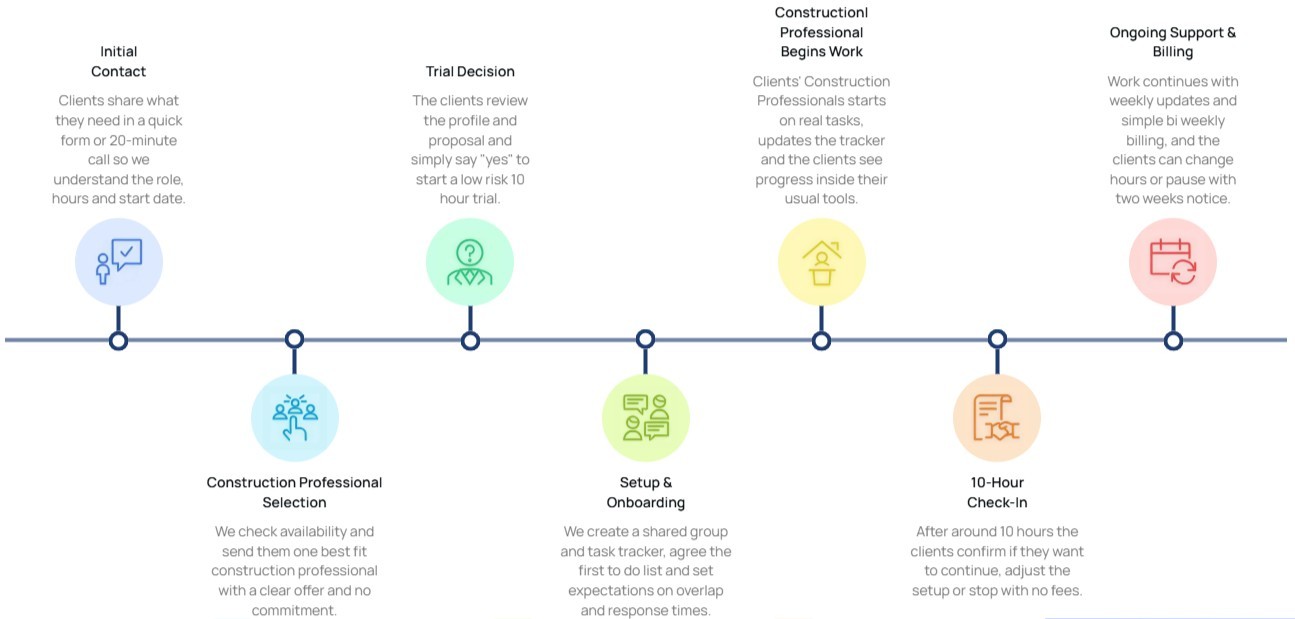
10-hour free trial
Flexible billing tied to actual hours worked
Cancel or pause with two weeks' notice
Capacity scales with project volume
Self-managed and managed tiers available
Frequently asked questions
Implementation note: Wrap this section in FAQPage schema markup (schema.org/FAQPage) to qualify for rich results in Google.
Can the artist work in our preferred software (Lumion, Enscape, Twinmotion, V-Ray)?
Yes. The professional pool covers the major visualization tools. The match process accounts for software experience and output type before placement.
Will the visualization match our firm's visual standards?
That's the default. The kick-off captures your firm's brand voice, lighting style, material treatment, and atmospheric handling. The artist works inside your visual identity from the first render.
Can the artist produce real-time review environments for design workshops?
Yes. Real-time review production in Enscape or Twinmotion is part of standard scope on engagements where the use case is design workshop or stakeholder review.
Do you handle animation and walkthrough video?
Yes. Animated walkthroughs, flythroughs, and project narrative videos are part of standard scope. The match process accounts for animation experience separately from still image specialists.
How do revision rounds work?
Revision rounds are part of standard scope. Material changes, lighting adjustments, composition refinements, and post-production updates run inside the engagement, not as a separate add-on.