
Residential architectural work runs on volume. Builders, developers, and small-firm architects move dozens of projects through design at the same time, each one running on a tight budget that can't absorb senior-architect time on production drawings or permit packages.
When the design team gets stuck on production work, the principal stops doing the work that actually grows the firm: client relationships, design quality, and pursuit. The result is a firm trading senior time for production output it shouldn't be paying senior rates for.
AEdigo gives residential builders, developers, and design firms on-demand access to pre-vetted architectural professionals who handle production drawings, permit packages, design development, and revision rounds. They work inside your residential standards, your titleblock, and your local authority requirements.
What residential architectural design services actually deliver
The output isn't conceptual design. It's the production drawings, permit packages, and revision support that turn an approved concept into a buildable, permittable, executable project.
Typical outputs from a residential architectural professional working through AEdigo:
Design development drawings progressing schematic concepts to construction-ready documentation
Construction document sets including plans, elevations, sections, and details
Permit submission packages aligned to local authority requirements
Specifications and door, window, and finish schedules
Energy code compliance documentation
Revision rounds against authority comments and client redlines
Coordination with structural and MEP consultants
Renovation and addition drawings with as-built reconciliation
When you actually need residential design support
Project volume is growing faster than the in-house team can absorb.
Permit submissions are slipping and authority comment cycles are stacking up.
A builder is moving multiple homes into design simultaneously and needs production capacity.
A design competition or rush project is eating bandwidth from active client work.
An authority cycle generated heavy comments and revision capacity is short.
You're entering a new market and need someone who knows local residential code requirements.
How AEdigo runs residential design work
1. Match against project type and authority context
The match accounts for project type, authority requirements, and software stack.
2. Kick-off on standards and templates
Titleblock, drawing numbering, layer standards, residential specification format, and authority submission template. Twenty minutes of alignment up front prevents weeks of comment-cycle rework.
3. Production cadence
Drawing production happens on the cadence your firm needs. Daily drops on tight schedules, weekly batches on standard pace. The professional adapts to your team's rhythm, not the other way around.
4. Internal review pass
Before authority submission or client release, the package goes through a self-review against the authority's checklist and the firm's quality standards. Authority comments rejected are revisions you don't carry.
5. Progress report
Drawings completed, drawings in review, drawings under revision, and what's queued. Project leadership sees the production pipeline as it actually is.
Tools residential architectural professionals work in
AutoCAD for primary 2D drafting and construction documentation
Revit for projects requiring residential BIM and energy modeling integration
SketchUp for design development and concept visualization
Bluebeam Revu for redline and authority comment management
Lumion, Enscape, and Twinmotion for residential rendering
Local authority submission portals and templates
What separates a production architect from a residential drafter
Anyone can produce a plan. The professional who delivers a permit-ready, buildable, code-compliant set knows the residential code, the local authority's review pattern, and the trade interfaces a builder will hit on site.
AEdigo vets residential architectural professionals on:
Residential building code fluency including IRC, IBC, and local amendments
Authority submission experience including permit cycle and comment response
Energy code and envelope detailing experience
Coordination instinct across structural and MEP scopes
Specification and schedule discipline
Detail library development and reuse
Communication skills for client and authority cycles
Software fluency across the residential stack
Use cases by stakeholder
Residential builders and developers
Production drawings for stock and custom plan portfolios
Permit packages aligned to local authority requirements
Plan adaptation for site-specific conditions
Renovation and addition design support
Architecture firms
Production capacity for design development and CD phases
Permit package preparation and authority comment cycles
Specifications and schedule production
Renovation as-built and design development
Designer-builders and design-build firms
Combined design and production support
Permit and submission work alongside construction documentation
Common residential design failures that delay projects
Most permit and construction delays trace to predictable design failures. If your projects are hitting any of these, the issue is process, not effort.
Permit submissions missing required code compliance documentation.
Energy code and envelope details inconsistent across drawing sheets.
Authority comment responses incomplete, triggering second-round comments.
Specifications and schedules not coordinated with the drawing set.
Coordination gaps with structural or MEP consultants creating field issues.
Renovation drawings without proper as-built reconciliation.
Detail libraries not maintained, leading to inconsistent detailing across projects.
Where residential design firms actually need leverage
Residential firms scale slowly because the principal becomes the bottleneck. Production drawings, permit responses, and revision rounds all funnel through the senior team, even though most of that work doesn't require senior judgment.
The leverage points are usually the same across firms:
Production drawings on stock or repeat plan portfolios, where the design judgment was made once and the production work just adapts to the site.
Permit packages aligned to local authority templates, where the work is procedural rather than design-driven.
Authority comment cycles, which generate volume work that doesn't need to occupy senior time.
Specifications and schedules, which require coordination but not design decisions.
Renovation as-built reconciliation, which is field-driven measurement rather than design.
Energy code documentation, which is checklist work against the specification.
What changes when leverage is in place
Firms that successfully offload production work see the principal's calendar open up for client work, design review, and pursuit. Project capacity grows without proportional headcount. The firm's design quality stays consistent because senior time concentrates on the decisions that actually require it. The cost of production work drops to the level it should have been at all along.
Residential design services vs. the alternatives
The alternatives are: hire more in-house architects, contract to a freelance drafter with no architectural depth, or stretch the principal's time across design and production.
Hiring full-time works for firms with steady project flow. It doesn't fit firms with seasonal volume or growth phases that haven't stabilized.
Freelance drafters without architectural depth produce drawings that look right and miss code or coordination issues, generating authority comments and field rework.
Stretching the principal across design and production is the most common pattern, and the most expensive. The principal stops doing the work that grows the firm.
AEdigo runs residential design support as a managed engagement: vetted architectural professionals, your firm's standards, your authority context, with internal review and progress reporting.
How engagement works
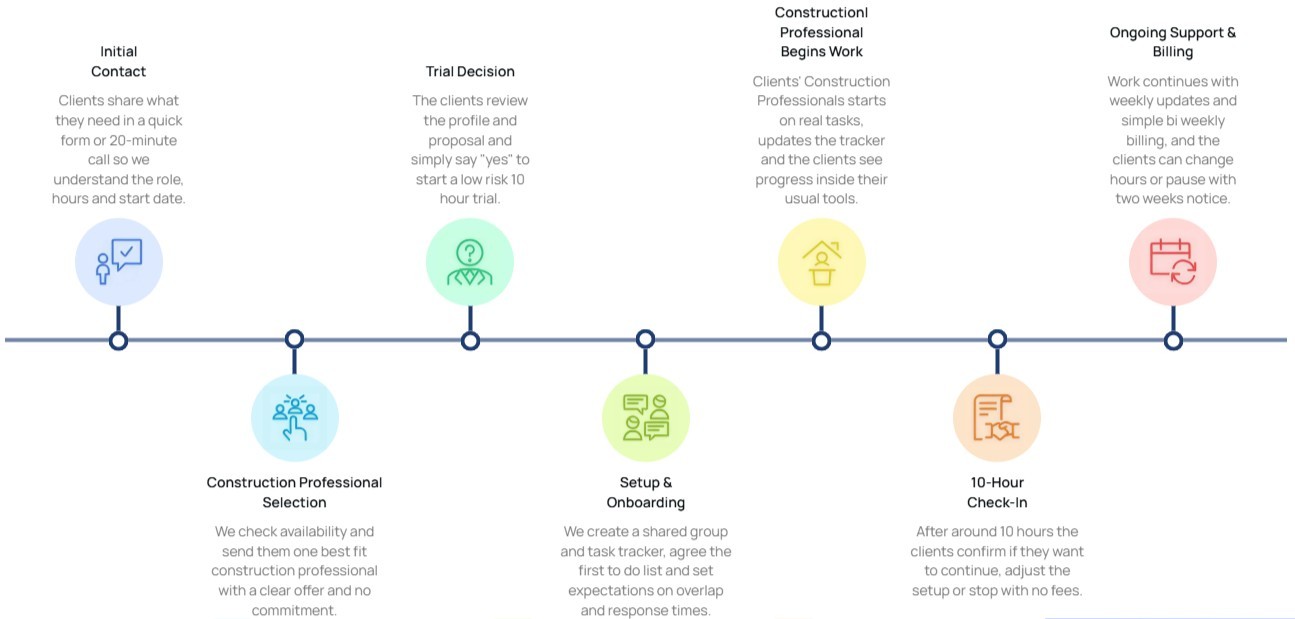
10-hour free trial
Flexible billing tied to actual hours worked
Cancel or pause with two weeks' notice
Capacity scales with project volume
Self-managed and managed tiers available
Frequently asked questions
Implementation note: Wrap this section in FAQPage schema markup (schema.org/FAQPage) to qualify for rich results in Google.
Can the professional work to local code requirements in our market?
Yes. The match process accounts for local authority context. Residential code requirements (IRC, IBC, local amendments) and authority submission templates get locked at kick-off, so the drawings come back permit-ready for your specific market.
Will the drawings follow our firm's titleblock and detail library?
That's the default. The kick-off captures your titleblock, layer standards, detail library, specification format, and schedule template. Drawings come back in your firm's format, ready for client release or authority submission.
Can the professional handle authority comment response cycles?
Yes. Authority comment response is part of standard scope. The professional handles comments, revises drawings, updates the revision log, and re-submits the package without restarting the engagement.
Do AEdigo's residential professionals work in Revit or AutoCAD?
Both. The professional pool covers AutoCAD-led firms (most residential builders) and Revit-led firms (most residential architecture practices). The match process accounts for software fluency before placement.
Can the professional handle renovation and addition projects with as-built reconciliation?
Yes. Renovation work requires as-built baseline drawings before design development can start, and the professional pool includes experience producing as-builts from field measurements or existing documentation. The match process accounts for renovation experience separately from new-build experience.