
Shop drawings sit between design intent and what actually gets built. When they're tight, fabrication runs clean and field installation goes in without drama. When they're loose, you get rejected submittals, refabricated parts, and a field crew that stopped trusting the drawings two weeks ago.
Most shop drawing problems aren't drafting problems. They're capacity problems. The detailer who knows the work is buried on three other jobs, the consultant keeps issuing redlines, and the fabricator needs drawings released to start cutting steel by Friday.
AEdigo gives fabricators, subcontractors, and general contractors on-demand access to pre-vetted shop drawing detailers. They are fluent in AutoCAD, Tekla Structures, Revit, SolidWorks, and the consultant review process every package has to survive. They work inside your detailing standards, follow your titleblock, and produce drawings the shop can actually build off.
The work runs through a managed delivery layer with progress reporting and replacement coverage if the fit isn't right.
What shop drawing services actually deliver
The output isn't a drawing. The output is a fabricator who can cut steel, a sub who can submit to the consultant, and a field crew that doesn't have to call out for clarification.
Typical outputs from a shop drawing detailer working through AEdigo:
Structural steel shop drawings including connections, anchor bolts, and erection plans
MEP shop drawings for piping, ductwork, electrical containment, and equipment
Façade and curtain wall shop drawings with installation and anchor details
Joinery, casework, and millwork shop drawings
Precast concrete shop drawings and erection drawings
Fire protection shop drawings including sprinkler layouts and hydraulic calculations support
Coordination drawings showing trade interfaces
Submittal packages prepared for consultant review
Revision tracking against consultant redlines
When you actually need shop drawing support
Most teams know they need shop drawing capacity before they admit it. These are the moments where the cost of waiting is already showing up in the project.
Your fabricator is waiting on released drawings to start cutting and the schedule is being eaten.
A consultant has rejected a submittal twice and you need a clean re-issue fast.
You won a sub package and the GC needs shop drawings inside three weeks.
Your in-house detailer is on another project and there's no slack.
Field installation is hitting interferences that should have been caught in the shop drawings.
You're a fabricator getting drawings from a sub who can't keep up with your shop's intake.
A trade partner left mid-project and the shop drawing pipeline broke.
How AEdigo runs shop drawing work
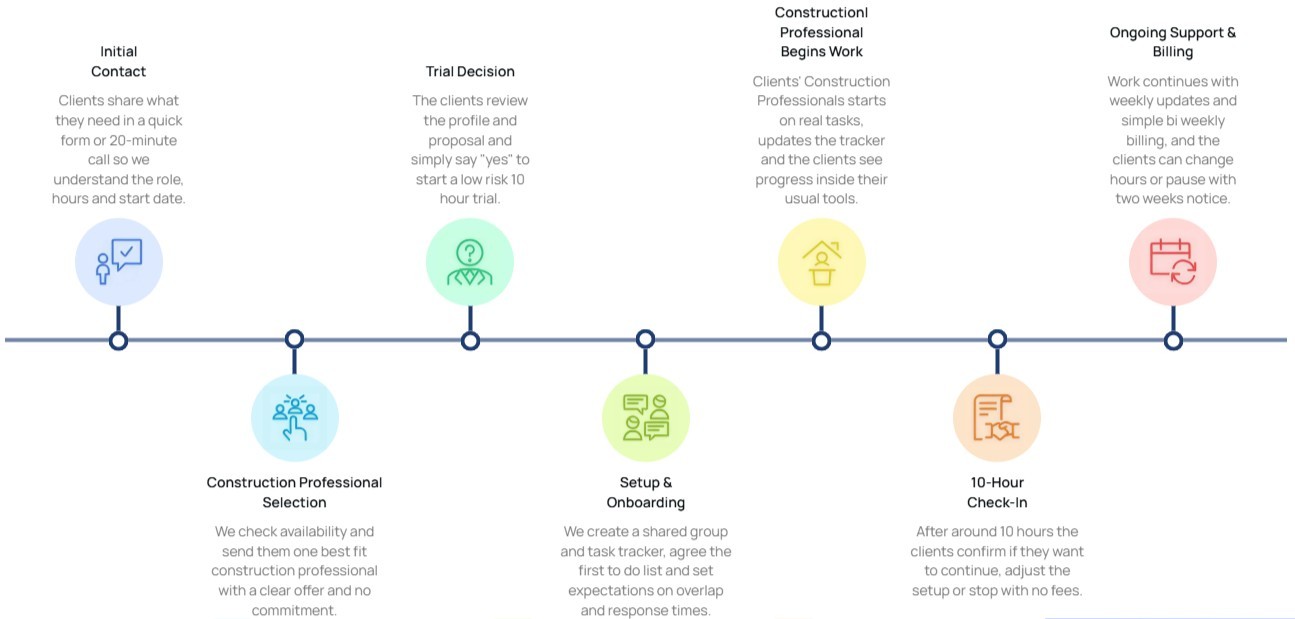
1. Match against trade and software stack
Steel detailers don't get placed on MEP scopes. Tekla detailers don't get matched to AutoCAD-only fabricators. The match accounts for trade type, complexity, software fluency, and consultant submission standards.
2. Kick-off on detailing standards
Titleblock, drawing numbering, dimensioning conventions, weld and bolt symbols, finish callouts, and the consultant's submission template. Twenty minutes of alignment up front saves a rejected submittal later.
3. Production and review cadence
The detailer issues drawings on the cadence your shop or consultant needs. Internal review, then submittal package preparation, then revision rounds against consultant redlines.
4. Progress report
Drawings completed, drawings in review, drawings under revision, and what's queued next. Project leadership sees the pipeline status without having to ask.
5. Replacement coverage
If the detailer isn't producing at the right level, whether speed, quality, or trade depth, we replace them. Bad shop drawings cost more than capacity does.
Tools shop drawing detailers work in
AutoCAD for primary 2D shop drawing production across most trades
Tekla Structures for steel detailing and connection design coordination
Revit for trades working off federated coordination models
SolidWorks and Inventor for fabrication-driven manufacturing detailing
Advance Steel for steel detailing inside the Autodesk stack
SDS/2 for steel connection detailing and fabrication output
Bluebeam Revu for redline management and submittal markup
Navisworks for shop drawing coordination against the federated model
What separates a good detailer from a CAD operator
Anyone can copy a connection detail from a precedent. The detailer who keeps shop drawings off the consultant's rejection pile knows why each line is on the page, how the consultant reads it, and what the fabricator will catch on the floor.
AEdigo vets shop drawing detailers on:
Trade-specific construction knowledge across steel, MEP, façade, or joinery
Submission discipline against consultant standards and authority requirements
Coordination instinct, knowing where their drawing has to align with another trade
Welding, bolting, anchor, and connection knowledge appropriate to the scope
Fluency with revision rounds and redline implementation
Ability to read and interpret IFC drawings and specifications
Awareness of fabrication tolerances and what the shop can actually cut
Submittal package preparation including transmittal sheets and revision logs
Use cases by stakeholder
Fabricators
Steel shop drawings ready for cutting and welding
Erection plans and field bolt lists
Connection design coordination support
Production-ready fabrication documentation
Subcontractors
MEP shop drawings for piping, ductwork, and containment
Façade and curtain wall installation drawings
Submittal packages for consultant review
Coordination drawings against the GC's federated model
General contractors
Shop drawing review against the coordinated model
Trade interface coordination drawings
Submittal log management and consultant routing
Suppliers and product manufacturers
Product-specific shop drawings and installation details
Custom fabrication drawings for project-specific scope
Common shop drawing failures that cost field time
Most shop drawing rework traces back to the same handful of failure modes. If your current shop drawing pipeline is hitting any of these, the issue is process, not the detailer.
Drawings issued without internal review, so the consultant is the first set of eyes that catches the error.
Coordination clashes that should have been caught against the federated model before submittal.
Inconsistent titleblocks and drawing numbering across trades, which makes consultant review slow.
Connection details copied from precedent without checking against the actual structural design.
Revision tracking that loses the consultant's last redline cycle, forcing a re-submission.
Tolerance assumptions that don't match what the fabrication shop can actually hold.
Field-condition assumptions that don't match the as-built structure on site.
Shop drawing services vs. the alternatives
The realistic alternatives are: hire a full-time detailer, contract out to a freelance detailer with no oversight, or stretch the in-house team and absorb the rework cost.
Hiring full-time works for fabricators with steady production volume. It doesn't work for subs and GCs whose shop drawing load spikes around specific projects.
Freelance detailers can cover spikes but offer no replacement coverage, no progress reporting, and no review layer between their output and the consultant. When the freelancer disappears, the package stalls.
Stretching the in-house team usually means shop drawings get done late and reviewed less. Rejected submittals climb. Field rework climbs. Schedule slips.
AEdigo runs shop drawing work through a managed layer. Vetted detailers, progress reporting, replacement coverage, and capacity that adjusts as the project moves.
How engagement works
10-hour free trial, no card required
Flexible billing tied to actual hours worked
Cancel or pause with two weeks' notice
Adjust hours as project workload changes
Self-managed and managed tiers available
Frequently asked questions
Implementation note: Wrap this section in FAQPage schema markup (schema.org/FAQPage) to qualify for rich results in Google.
Do AEdigo's detailers work in Tekla, Revit, AutoCAD, or other software?
Yes. The match process accounts for software fluency before placement, so you get a detailer who already knows your stack.
Can the detailer prepare full submittal packages, not just drawings?
Yes. Submittal package preparation including transmittal sheets, revision logs, consultant routing, and revision tracking is part of standard scope. You can also include calculations packages and product data sheet integration if the consultant requires them.
Will the detailer follow our titleblock and drawing standards?
That's the default. The kick-off covers your titleblock, layer standards, dimensioning conventions, and consultant submission template before any production work begins.
What happens when the consultant issues redlines?
The detailer pulls the redlines, implements the changes, updates the revision log, and re-issues the package. Revision rounds are part of standard scope, not a separate engagement.
Can the detailer coordinate against our federated coordination model?
Yes. Coordination against a federated Navisworks or Revizto model is a common scope item. The detailer pulls the coordinated geometry, identifies clashes against the shop drawing scope, and adjusts before submittal.